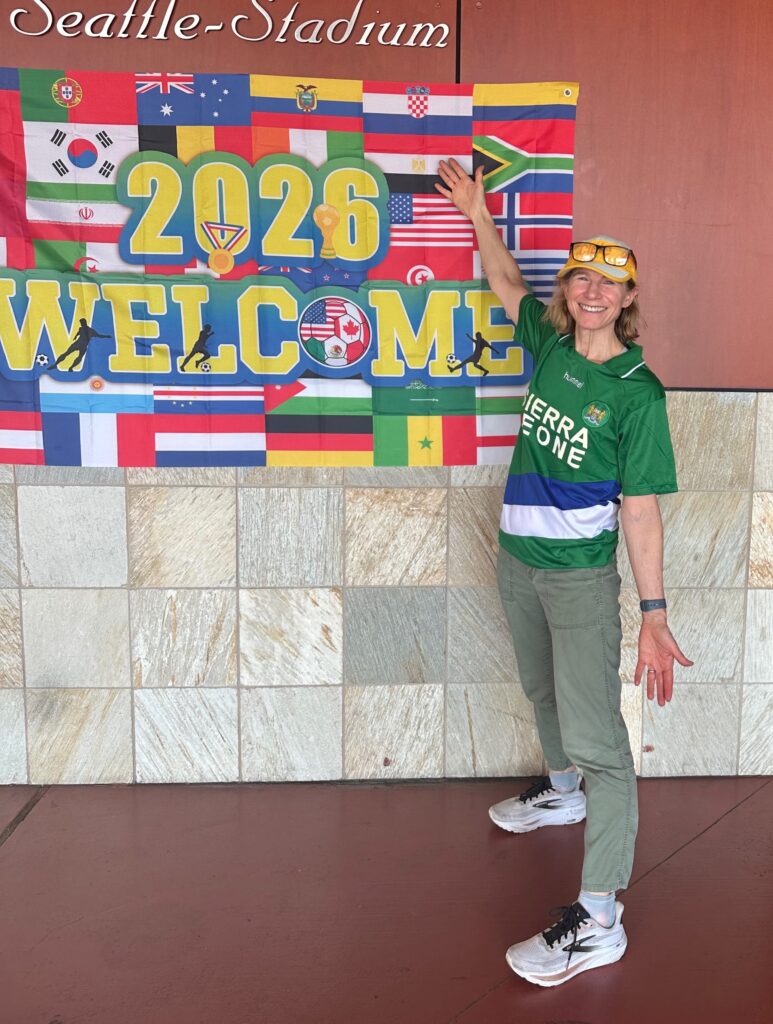
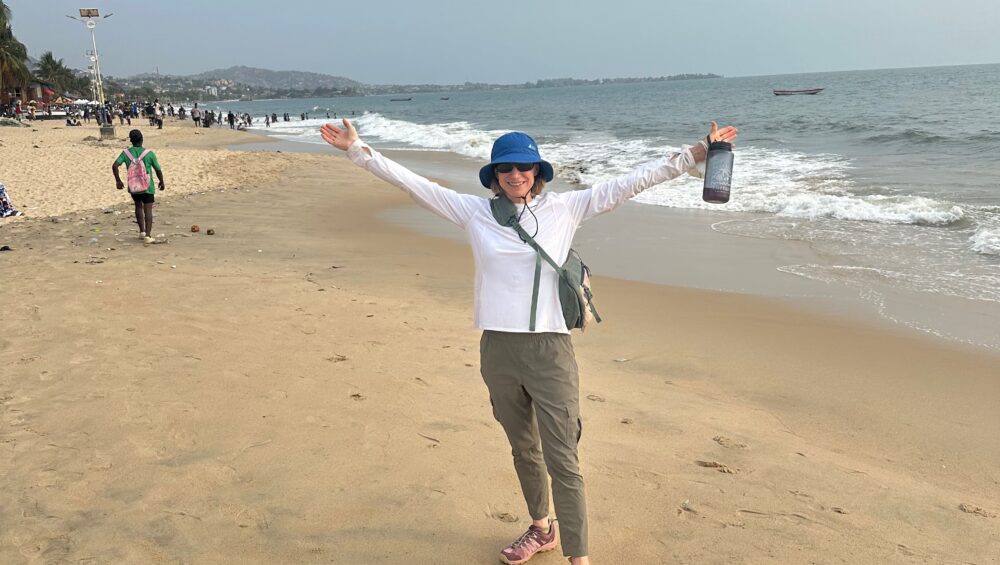
For nearly four years, Joanna Mattson had helped support SfS’s work in Sierra Leone from thousands of miles away in Seattle. As Schools for Salone’s (SfS) Finance and Business Information Manager, she had read reports and listened to countless stories about communities in the West African nation. However, nothing could have prepared her for her first experience on Sierra Leonean soil.
When Joanna arrived at Lungi International Airport in mid-April this year, she carried an image of Sierra Leone primarily shaped by Schools for Salone photos and videos of remote communities surrounded by undeveloped land.
Then she arrived in Freetown.
Instead of the calm she had imagined, she found a city alive with movement. Bustling streets, roadside vendors, busy traffic, and a constant flow of people creating an energy unlike anything she was used to.
Comparing Freetown to the slower pace of Seattle, Joanna couldn’t help but think,“my hometown is so boring!”
But instead of being overwhelmed, Joanna found herself captivated by what she described as a “good-type-of-busy.”
Her journey began with the grand opening of Pentagon School – also known as Charlie Anne School – before travelling north to Koinadugu, and Falaba Districts. Over three days, she and the SfS team visited several remote partner schools, staying in Bafodia where they were welcomed as honoured guests by the Paramount Chief.
“As someone who has never travelled to Africa before, I had so much fun and it was so eye-opening.”
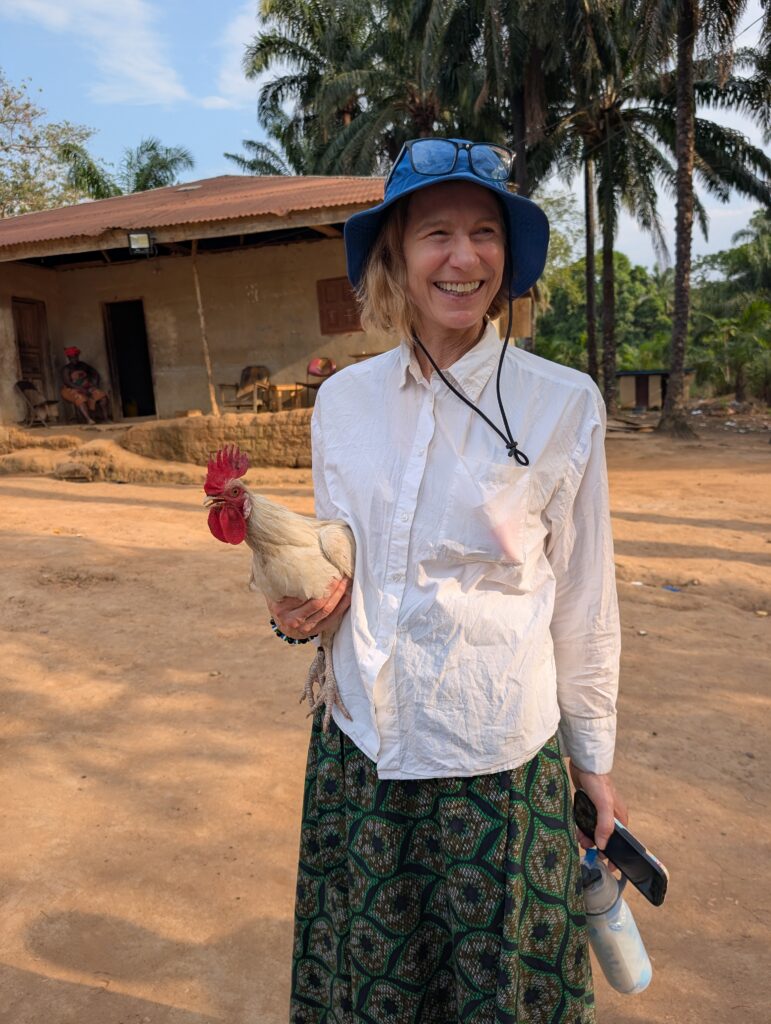
Seeing the Mission Come to Life
Although Joanna had spent years working alongside passionate donors and supporters of Schools for Salone, seeing the work firsthand transformed her understanding of its impact. One of the things that stood out to her was the clear evidence that the reason Schools for Salone’s approach works is because it is built on a foundation of personal relationships and deep respect.
“I witnessed honest, open, and productive conversations when we sat across from the teachers, administrators and community leaders. There was mutual understanding and respect, but also space to ask questions, learn more, and dig into complicated issues with no easy solutions.”
Among Joanna’s most treasured memories is a classroom visit that perfectly captured why Schools for Salone’s work matters. Most students hesitated when Executive Director, Allison Sinning, used a sight-word poster to quiz them on their reading skills. A young girl broke the silence, answering correctly with confidence. Her classmates burst into applause. It was as if they all knew she could be counted on to know the answer before anyone else.
“There was something about her composure: you could tell she was a really bright kid. Right there, I imagined what would have happened if this little girl didn’t have a school to go to. It filled my heart with gratitude for the people who fund the work we are doing, for the community that supports the school and for the parents who make sure she gets there every day.”
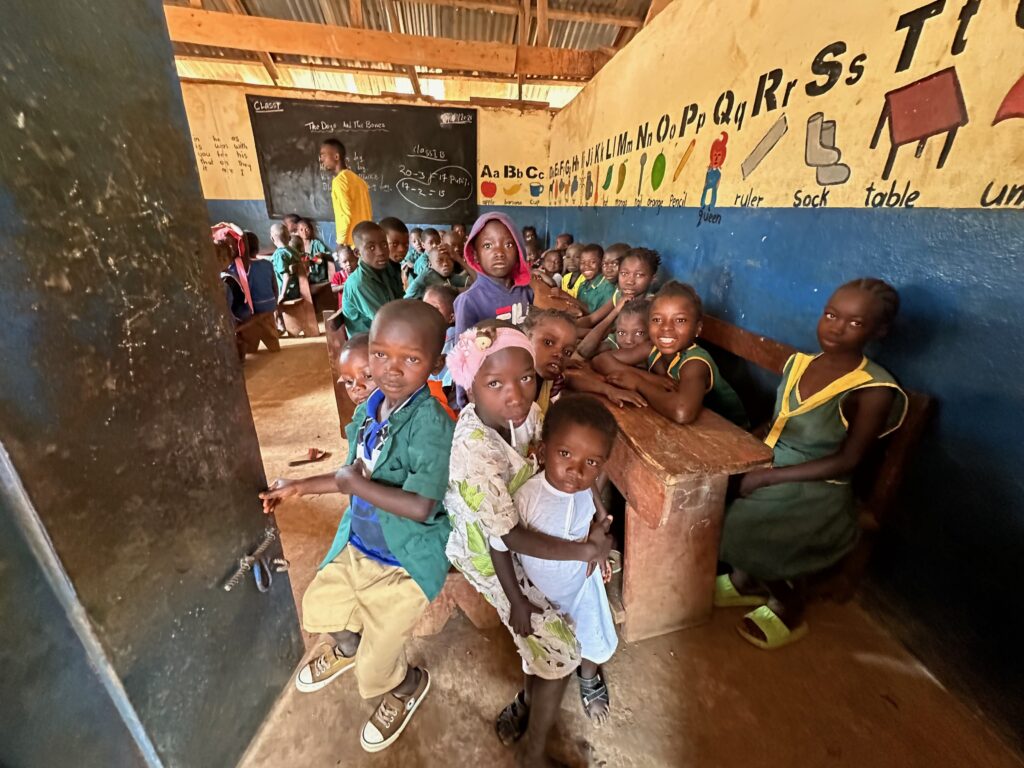
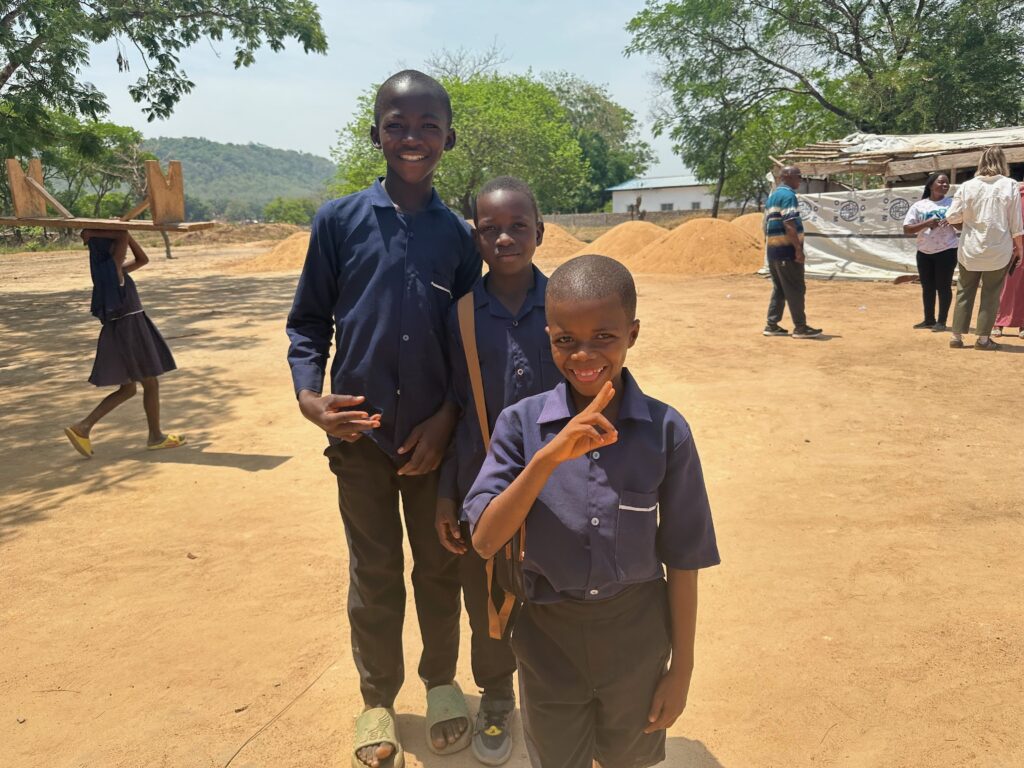
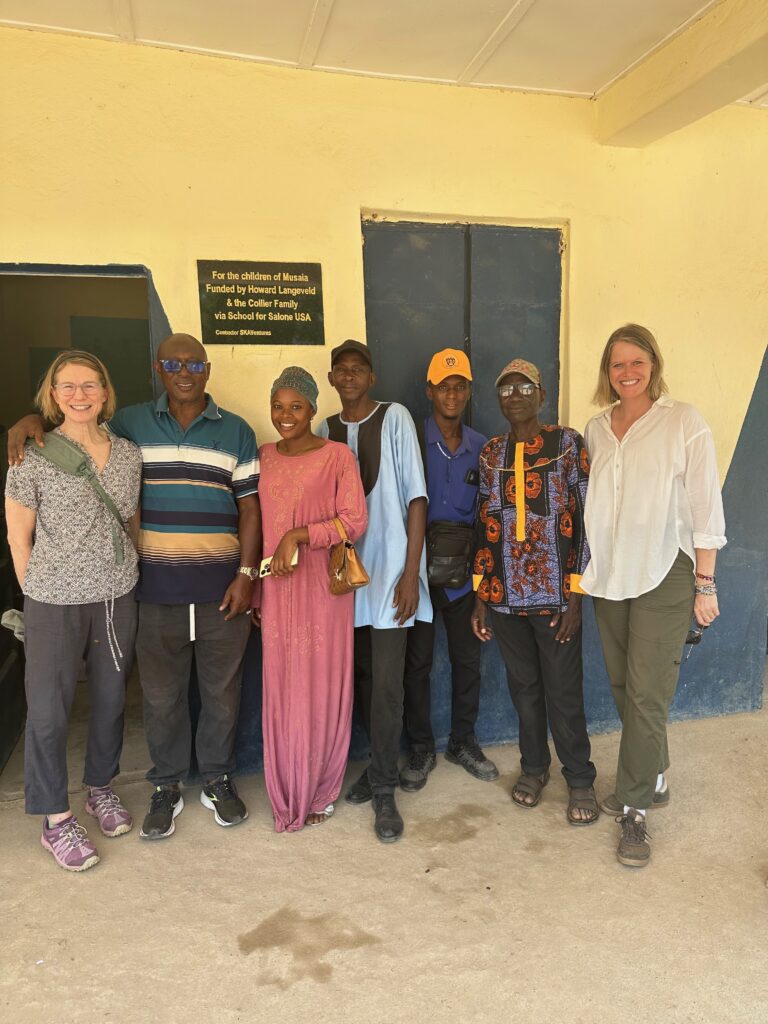
The teachers left an equally lasting impression.
“Teachers and school leaders were always receptive to our questions, even when the answers exposed areas needing improvement. Allison never failed to acknowledge that education is a difficult business and there is no simple fix for the challenges facing teachers in Sierra Leone.
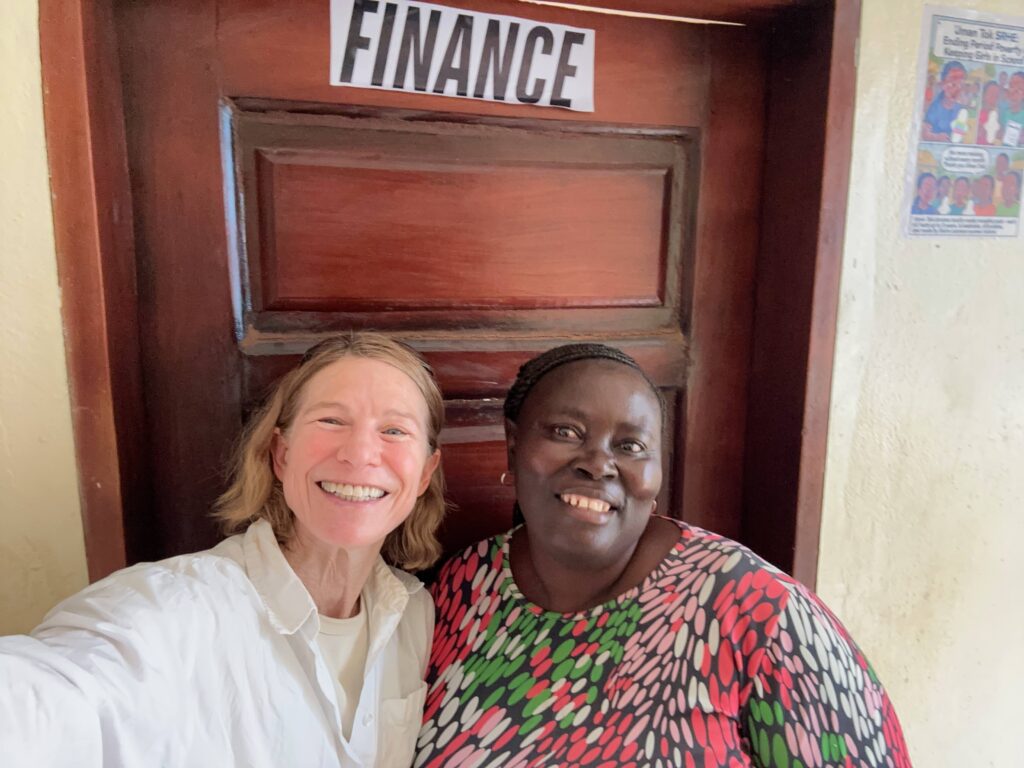
Joanna enjoyed meeting her Sierra Leonean colleagues and loved bonding with Aminata from Uman Tok and Jamieson from Programme for Children over their shared love for spreadsheets.
“Aminata showed me one of the most complex, yet beautifully organized spreadsheets I have ever seen. I’m looking forward to keeping the conversation going with our partners’ finance teams.”
Every Classroom is a Community Effort
Perhaps the biggest lesson Joanna took home was the dedicated effort that parents and other community members made to send local children to school.
“It’s impressive to consider that the uniforms children wear to school must be cleaned by hand – and I rarely saw students wearing dirty ones. Then there is the effort required just to get to school. Students travel long distances under the scorching sun, many wearing nothing more than flip flops, just to make it to class. They must share roads that aren’t much bigger than wide footpaths with motorbikes and, less frequently, cars. Teachers and students show up under challenging circumstances I couldn’t have imagined until I saw them with my own eyes.”
Yet, as Joanna quickly discovered firsthand, challenges are rarely excuses in Sierra Leone: shared effort and ingenuity help keep children learning. If the school needed more desks, community members would head into the forest, cut down a tree, and mill the timber to build furniture themselves.
Most items used in the schools are sourced and crafted locally, demonstrating the communities’ unwavering commitment to ensuring every child has the opportunity to learn. Nothing is wasted.
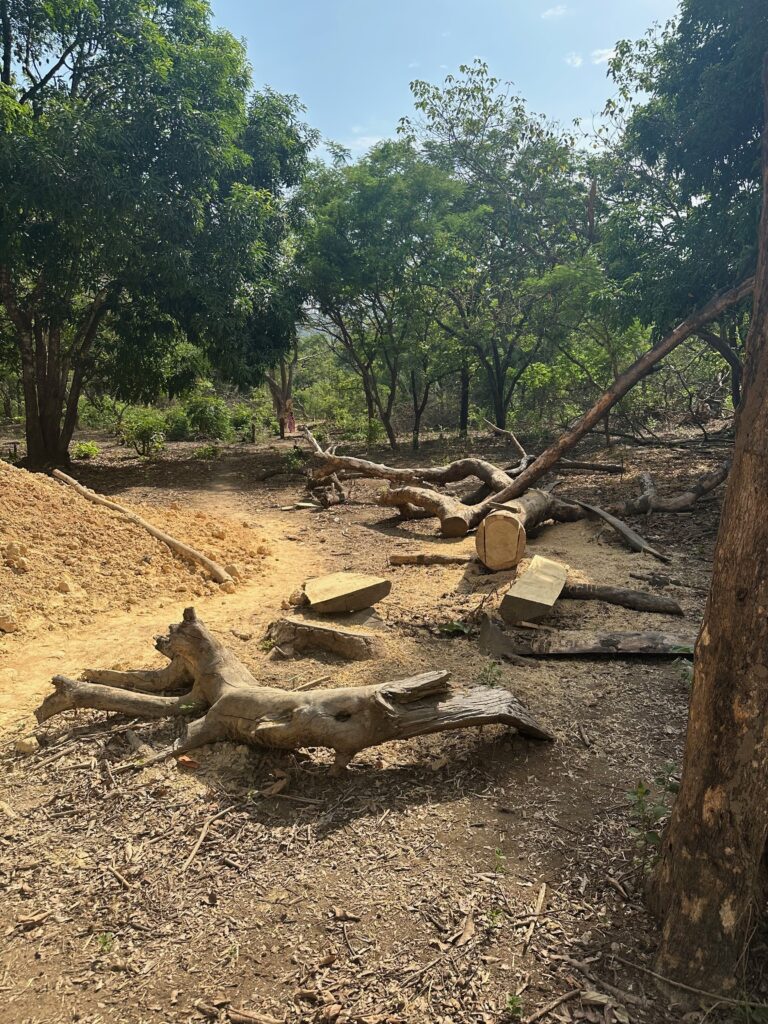
“In Kaponpo, 40+ people were providing physical labor to help construct a school building on the day we arrived, sending a message to local students that their community believes in them and is investing in their education.”
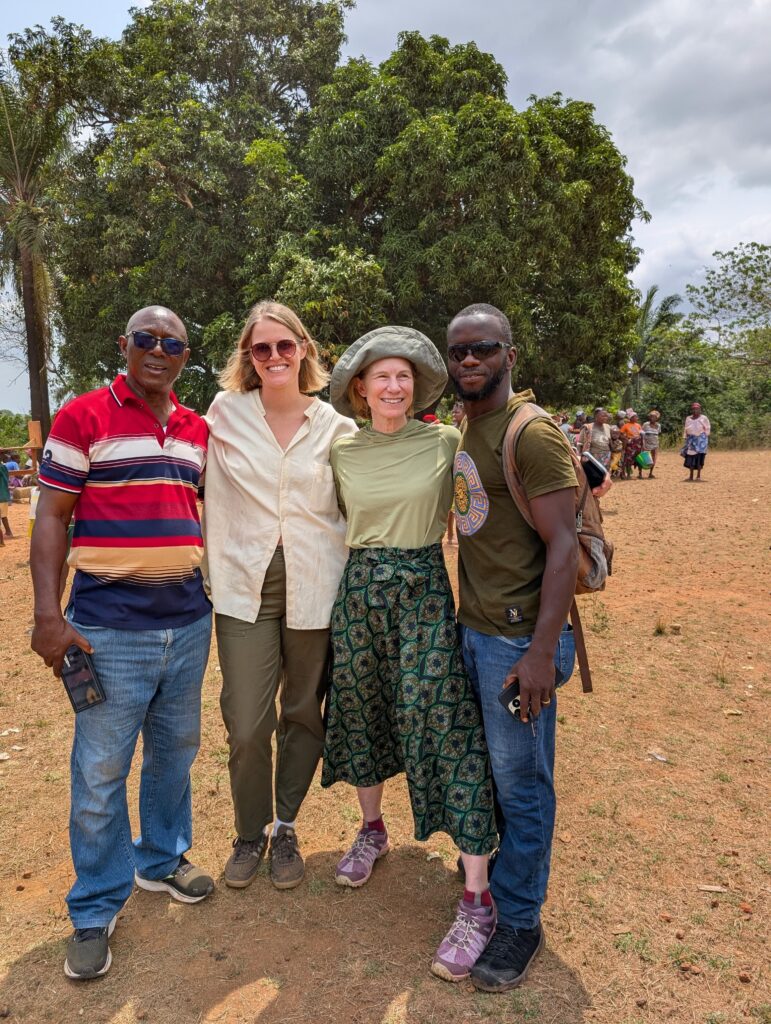
The Warmth that Went Beyond the Welcome
After visiting schools across northern Sierra Leone, Joanna and the team continued to Tonkolili District, before returning to Freetown in time to discover how seriously Sierra Leoneans take their Independence Day celebrations.
“We saw that locals had whitewashed rocks by the river and painted them in the national colours, and nearby somebody was making tye-and-dye t-shirts to sell during the celebrations. I was really noticing the hype and how excited people were for the day.”
Beyond the schools, Sierra Leone’s hospitality left a profound impression on Joanna.
From being greeted with a heartfelt “welcome home” at the airport to the sincerity with which people would ask “how the body?” every morning, Joanna was moved by the genuine care people showed one another.
“It made room for genuine connection. It was just really lovely.”
Joanna also returned to Seattle with an appreciation for African pop music, as well as for Sierra Leonean cuisine. She quickly fell in love with “big big beans,” packing a bag in her suitcase to take home. She enjoyed cassava leaves and rice, looked forward to breakfast with fresh spiced mangoes and plantains every morning, and couldn’t resist groundnut cake as a snack.
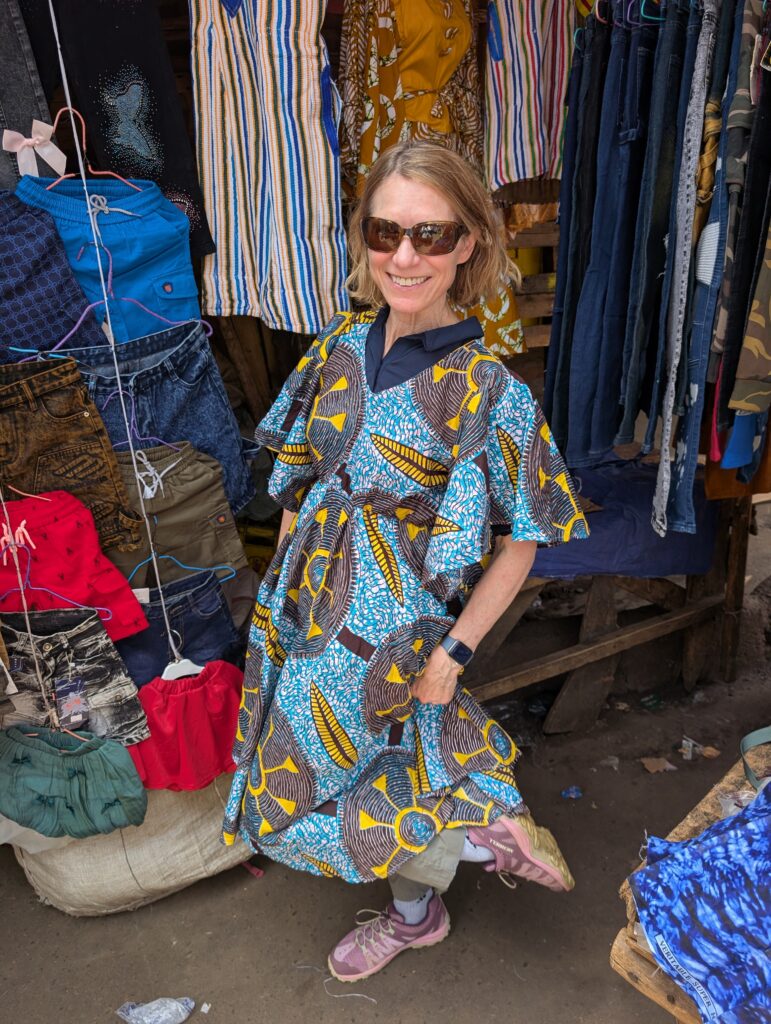
A New Perspective
Perhaps the most lasting lesson was a reminder not to underestimate people because of their circumstances, and to remain grateful for what she had. People may not always have material abundance, but they often carry something far more valuable: hard work, ambition, character, and integrity – qualities that can take people a long way in life.
Although Joanna’s day-to-day role revolves around budgets, financial reports, and spreadsheets, the visit connected those numbers to the real lives they represent. The classrooms, teachers, parents, and communities she met reminded her that behind every figure is a story, and that every contribution ultimately makes a difference.
“I just felt so grateful for every person who donates to make this possible.”
She hopes more donors will one day have the opportunity to visit Sierra Leone for themselves.
“I think it would change any donor’s appreciation for the value of their contributions. I know not everyone can make that trip. Getting to Sierra Leone from the US is arduous and expensive. It is a resource-scarce country and the lack of resources we take for granted can be difficult to see. But maybe this interview will help bridge that gap for people who can’t experience it themselves.”
For Joanna, Sierra Leone is no longer a place known only through Program Update newsletters and financial records. It is now a place filled with familiar faces, resilient communities, and lasting friendships: one she will carry with her for a long time to come.