When we talk about improving education in Sierra Leone’s last-mile communities, it is easy to focus on classrooms, books, and school buildings. But none of these can transform a child’s education without the person standing in front of the room: the teacher who chooses to show up each day and make learning possible.
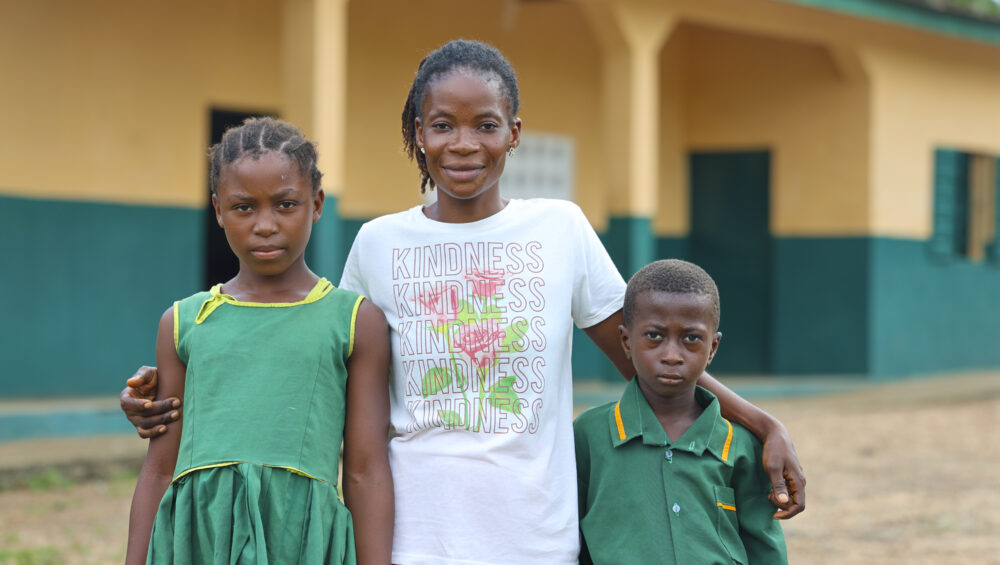
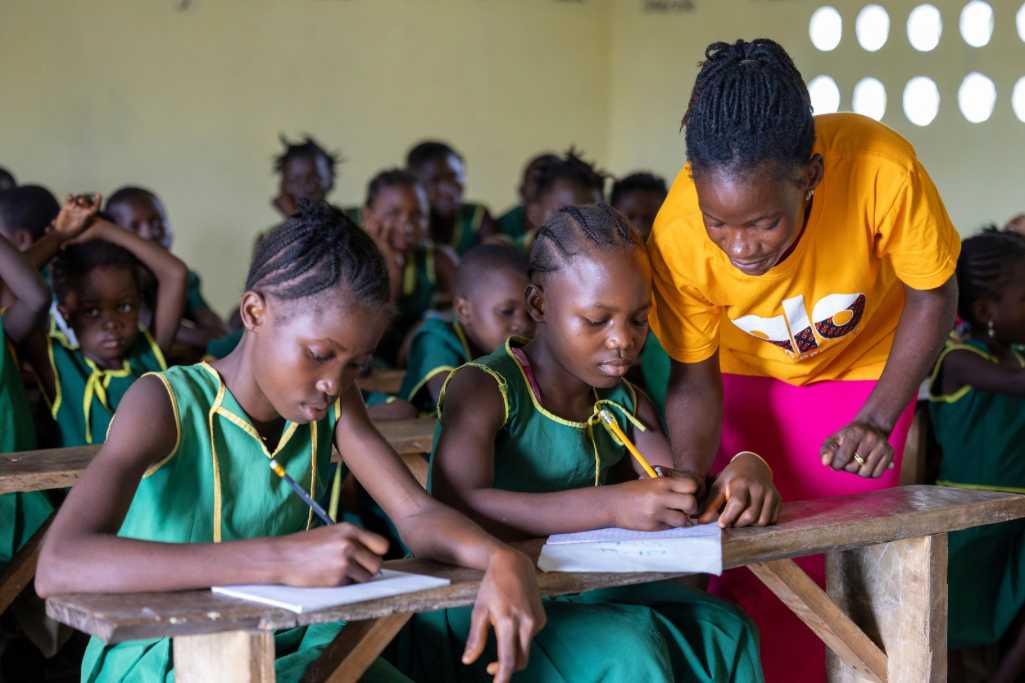
One such teacher is Salamatu Jalloh: the Language Arts teacher at S.D.A. Primary School in Masosingbi.
For Jalloh, the school day starts long before she reaches the classroom. Before leaving home, she cares for her daughter, cleans her compound, prepares food, and gets herself ready. Then she makes her way to S.D.A. Primary School in Masosingi where she teaches.
For teachers like Jalloh, working in a last-mile community means navigating challenges that extend beyond the classroom. Masosingo has no electricity, limited communications, no clinic, and poor roads. Preparing for lessons can be difficult.
“If I want to prepare my lesson notes, I do not have light to do it. I have to do it in the dark and it makes it very hard,” she said.
After the school day ends, Jalloh’s work is not finished. She returns home, changes, and heads to the farm before preparing dinner for her family. When she is done, she settles down and makes notes for her students into the night.
Despite all this work, she returns to the classroom every morning.
Teaching Without a Safety Net
Jalloh is one of the many teachers keeping classrooms running in communities where access to trained and supported teachers remains a challenge. She serves as a community volunteer teacher and is not on the government payroll.
Her experience sits within a wider challenge facing Sierra Leone’s educational system: the presumption that being a volunteer teacher means you are unqualified.
This is not always true, as the volunteer in ‘volunteer teacher’ is not a reference to qualification. It describes a source of support. Volunteer teachers are not on the government payroll and can receive little or irregular financial support from communities, schools, parents, or other sources.
According to research done by the Teaching Service Commission Sierra Leone, there are approximately 83,000 teachers in Sierra Leone. About 50,000 of those teachers are volunteer, community, or private school teachers, with reports indicating that about 32% of the overall teaching workforce operates on a volunteer basis. Research focusing specifically on rural Sierra Leone also adds that some volunteer teachers combine teaching with farming or other work just as Jalloh does.
For teachers serving last-mile communities, however, the two challenges can intersect: dedicated educators who are volunteers may be working in classrooms while still pursuing the qualifications and professional support they need to advance their careers and become qualified teachers.
Schools for Salone sponsored Jalloh to obtain her teaching certificate through a distance-learning program, helping her become a trained teacher while she continued serving students in her community.
She has also been an active participant in The Learning Foundation’s literacy teacher training program, building on her formal teaching qualification with practical skills to strengthen literacy in her classroom.
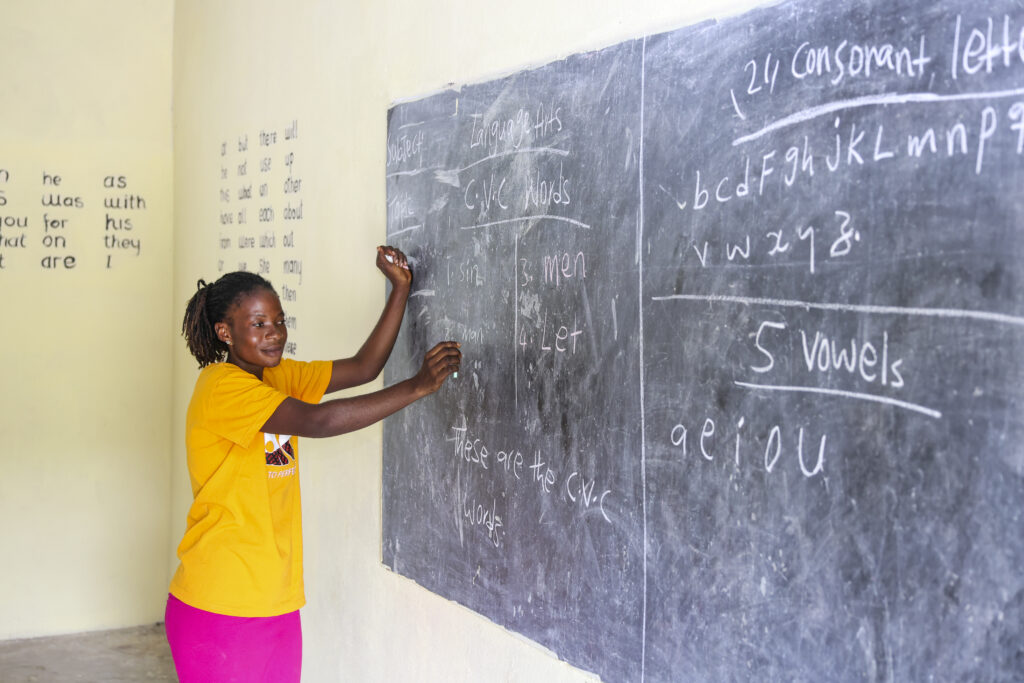
Today, she remains dedicated to her students despite the realities of teaching without a government salary.
“Let’s not even talk about salary because I am not a government-paid teacher. I am a community volunteer teacher. I come to school on an empty stomach, but with all that, I manage to see the kids learning.”
“Despite all the challenges, my aim is to become a professional teacher. I give a big thanks to Schools for Salone and their donors because they helped me afford my education and get my teacher certificate. This has kept me going in the classroom,” Jalloh said.
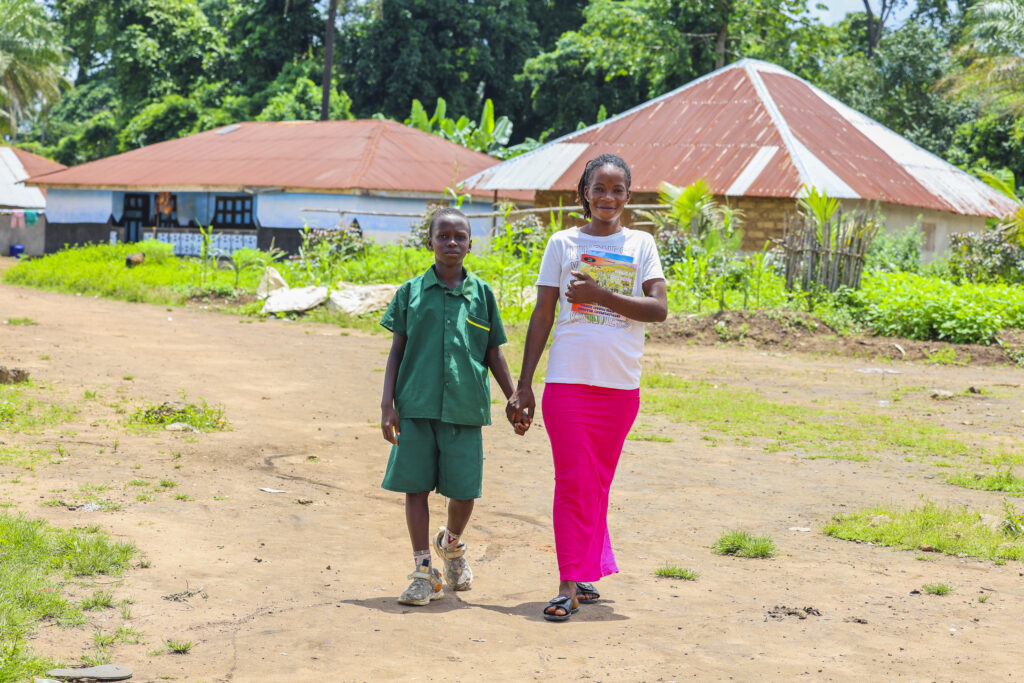
Her commitment is also due to her students. Jalloh knows that getting them into the classroom is only part of the challenge. Attendance remains a struggle, with some children arriving late or staying away unless teachers actively follow up on them.
“I do not joke with attendance… The children sometimes come late to school, and some of them do not come to school unless I run behind them. When they come, they do not always stay in the classroom. So I keep showing up.”
“It is Time to Support Teachers”
Perhaps the clearest measure of Jalloh’s commitment is what she sees when she looks around her classroom. She often asks her pupils whether they would like to become teachers one day. The response worries her.
“Out of a class of 50 to 60, only one will raise his or her hand. No one is willing to volunteer to become a teacher,” Jalloh said.
For Jalloh, that is more than a classroom observation. It is a warning of what happens when the people responsible for educating the next generation are themselves left without support.
Who will train the future generation of children if no one is willing to anymore?
“So if I could send one message to the world why teachers matter; it is that no one is willing to volunteer to become a teacher anymore. This can affect the next generation. It is time to support teachers,” Jalloh said.
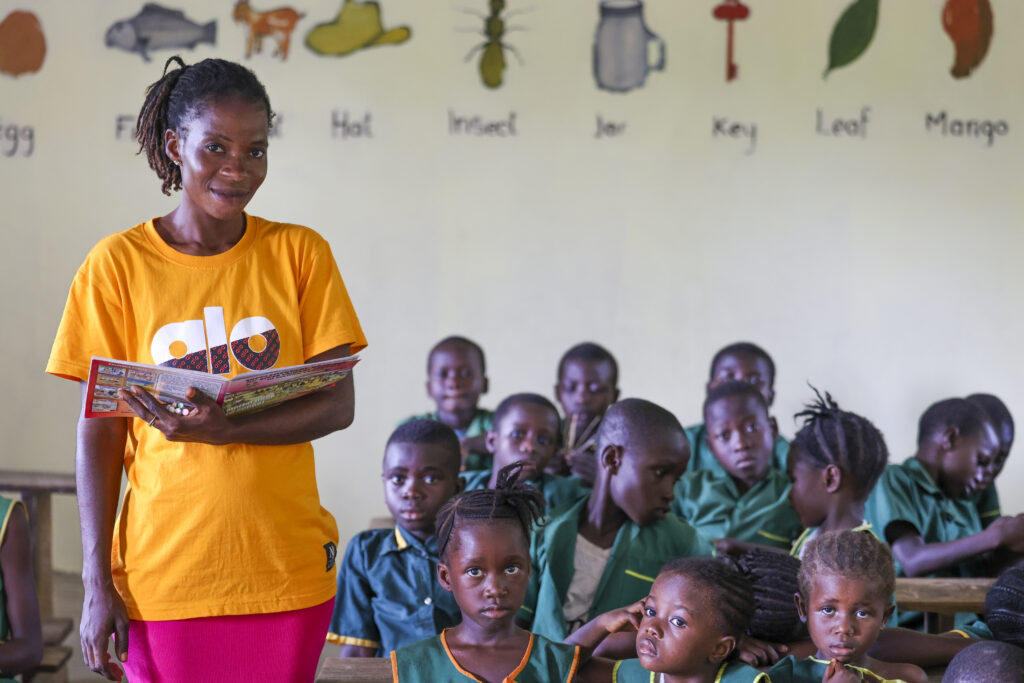
That is the heart of Schools for Salone’s 2026 Annual Fall Event, It Takes A Teacher.
This October, Schools for Salone will bring together supporters in Seattle to celebrate educators like Salamatu; teachers who continue to serve their communities despite limited resources, difficult conditions, and personal sacrifice.
It Takes A Teacher will happen on Saturday, October 17, 2026, at The Swedish Club in Seattle. The evening will celebrate the teachers working to shape Sierra Leone’s next generation and raise support for continued investment in educators.
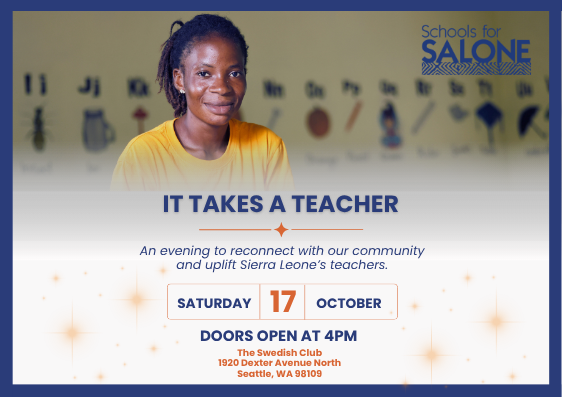
Join SfS in Seattle this October to celebrate by securing your early bird tickets. If you are unable to attend in person, you can still support their mission of expanding teacher training and literacy resources across the country by making a donation to our campaign.
Jalloh’s story is a reminder that behind every child who learns to read, every student who progresses to the next level, and every young person who discovers a future beyond their community, there is often a teacher who simply keeps showing up.
Because a teacher is what it takes.